
Taxes Hit Hard!!!….but Prop 19 Property Taxes HIT HARDER!!!
Sinister Proposition 19 Impacts Your Industrial Property Taxes and Your Financial LegacyProtect Your Investment Property and Preserve Your Financial Legacy

Don't let Proposition 19 catch you off guard. Take control of your financial future and protect your legacy. Fill out our Property Tax Calculator form now and receive a comprehensive report. Contact our team today to learn more about our services and explore solutions tailored to your unique situation.
How much could your property taxes skyrocket?Get a Free Prop 19 Property Tax Report.
Prop 19 Tax Calculator
Take Control of Your LegacyDon't let Proposition 19 catch you off guard. Take control of your financial future and protect your legacy. Complete our Property Tax Calculator form now and receive a free comprehensive property tax analysis report.Contact our team today to learn more about our services and explore solutions tailored to your unique situation.
SVN | Vanguard empowers property owners with crucial knowledge about Proposition 19 and its potential impact on property taxes and investment legacy. Don't let this legislation catch you off guard – take control of your future and make informed decisions.

What is Proposition 19?
Proposition 19, passed in 2020, brings significant changes to property tax assessments in the state of California. Property tax value assessments are reassessed immediately upon the transfer of assets, such as real estate, from previous ownership (e.g., parents). This can result in substantial increases in property taxes, potentially burdening your heirs with unforeseen financial challenges.
Check out the Video to Learn About Prop 19
Unveiling the Hidden Burden
Transferred or inherited property assessment may skyrocket, leading to property tax increases that can amount to hundreds of thousands of dollars annually. These costs could be unsustainable or unaffordable for your heirs, potentially jeopardizing the long-term financial wellbeing of your family.Avoid the Tax Burden – Take Action NowAt SVN Vanguard, we specialize in providing comprehensive solutions to mitigate the adverse effects of Proposition 19. We understand the complexities of the legislation and can guide the process of protecting your property and preserving your financial legacy.

Example of the Disastrous impacts on Prop 19 Property Taxes
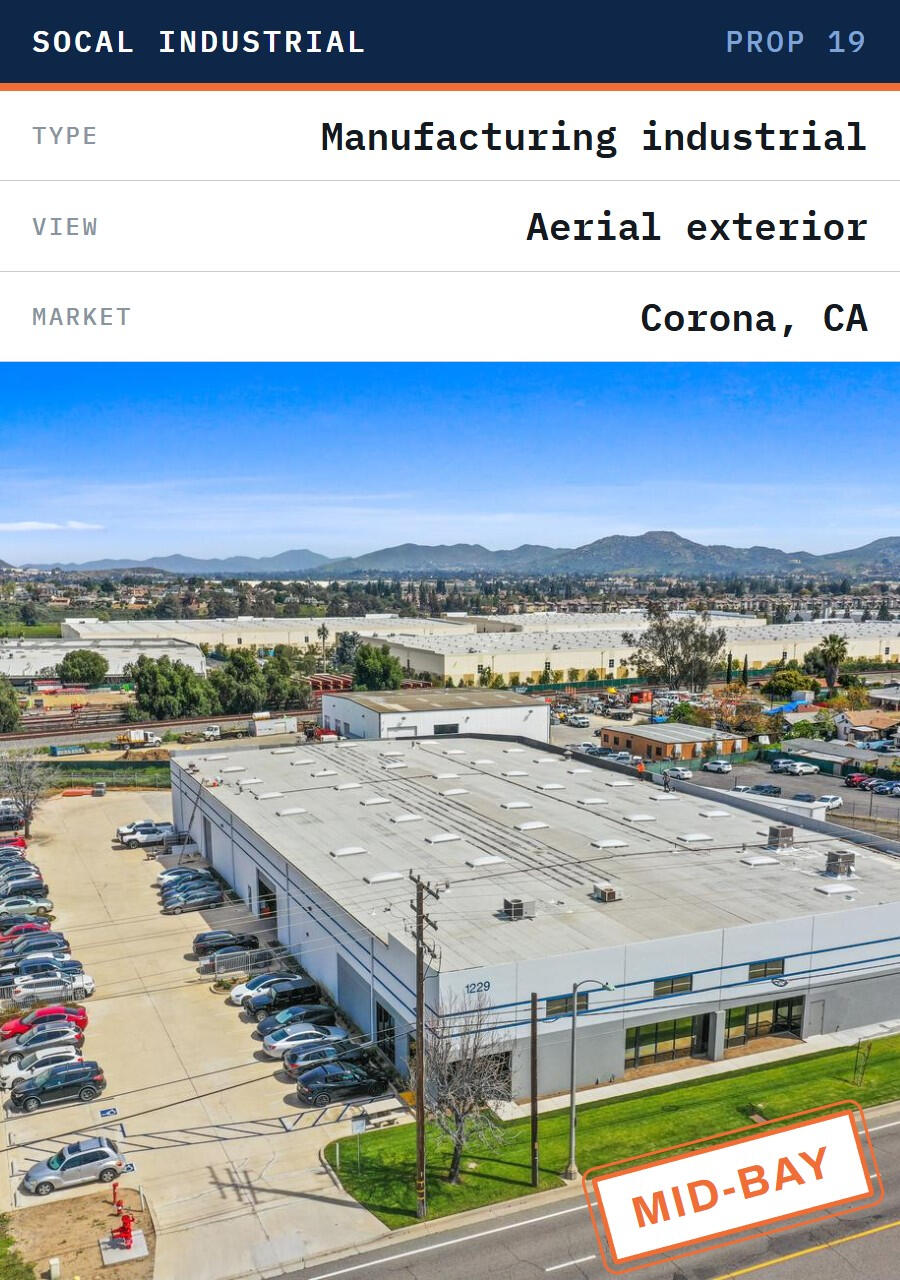
One of our clients owns a large industrial property in Southern California. It is an investment property that their parents purchased over 25 years ago. The property was intended to be inherited by the children upon the death of their parents. Their mother passed a few years ago, and the father just passed in late 2022.The property has now been transferred to the children and due to Proposition 19, the property tax assessment has been adjusted to the market value of the property, an increase of value of over $10,000,000.00 from the former assessed and taxable value.==The result is that the property taxes have increased a whopping 1066% per year a value which is over $100,000 more than the current tax amount...Guess what? The tenant who rents the building can’t afford the tax increase and neither can the family - Now What?

Discover the True Impact on Your Property Taxes
Take advantage of our Property Tax Calculator and get a detailed report on how Proposition 19 may impact your property taxes and investment legacy.Contact Us and Take Control of Your LegacyDon't let Proposition 19 catch you off guard. Take control of your financial future and protect your legacy. Fill out our Property Tax Calculator form now and receive a comprehensive report.Contact our team today to learn more about our services and explore solutions tailored to your unique situation.
How much could your property taxes skyrocket?
Get a Free Prop 19 Property Tax Report.
Prop 19 Tax Calculator
Prop 19 Tax Calculator
Take Control of Your LegacyDon't let Proposition 19 catch you off guard. Take control of your financial future and protect your legacy. Complete our Property Tax Calculator form now and receive a free comprehensive property tax analysis report.Contact our team today to learn more about our services and explore solutions tailored to your unique situation.
California industrial &
commercial investment property owners
$18,000 a year became $105,000. Overnight.
Prop 19 reassesses your property at today's full market value.
There is no parent–child/inheritor exclusion for industrial, commercial or any type of investment or rental property. None. When title moves to your kids or your inheritors, the assessor moves your basis to today's market value — and the property tax bill follows.
60 seconds · No cost · We don't sell your information
Where are you in this?
Most Options
I didn't know about this & need to plan ahead
Your parents still own it, or you do. You have the most time and the most room to move. This is where the real money gets saved.
Time-sensitive
I just inherited it
Title has moved or is moving. Some doors are closing, but the filing windows and the disposition decisions are still live.
Referral partners
I advise clients on this
CPA, estate attorney, wealth advisor or trustee. We supply the valuation and leasing input your Prop 19 plans are missing.
Case file · Southern California industrial
A real number,
from a real client.
Two partners owned the property and the business inside it for more than 30 years, and always intended both to pass to their children. One partner passed. The other passed in late 2024.
The passing of both original owners triggered the assessor to reassess to market value. The assessed value rose by nearly $7+ million, and the annual property tax bill went from roughly $18,000 to roughly $105,000.The property is on a net lease. The tax is a pass-through. That increase works out to about $.26 per square foot per month in added rent — dropped onto a tenant who signed a deal that never contemplated it.The tenant can't absorb it. The family can't absorb it. So the family called and had to sell the property to avoid the huge tax increase.
The part most owners miss: by the time the reassessment notice arrives, most of the useful options are gone. Everything worth doing happens before the transfer.
Prop 19 exposure calculator
What will your heirs actually owe?
Four inputs. Your number appears on screen immediately. Then get the 2-page Prop 19 Owners Brief.
For CPAs, estate attorneys and trustees
What we bring that the rest of the advisory team can't.
Your estate attorney knows the statute. Your CPA knows the return. Neither can tell you what the property is worth today, who would buy it, what it would lease for, or how a tenant reacts when occupancy cost jumps $0.26 a foot.That's the missing input in almost every Prop 19 plan we see. We supply it, we work alongside your existing advisors, and we don't replace them.
Who's running your numbers
Cameron Jones, SIOR
Cameron is a seasoned commercial real estate advisor with over two decades of experience helping property owners, investors, and businesses navigate sales, leasing, and strategic transactions across Southern California.He has been involved in hundreds of real estate transactions totaling hundreds of millions of dollars in volume. As a real estate advisor he brings a practical, results-driven approach providing sales and leasing services for a broad range of commercial assets, including industrial, office, flex, land, and specialty properties. Clients value his proactive problem-solving, clear communication, and ability to create opportunity in both strong and challenging markets.Cameron is a Senior Vice President with SVN Commercial Real Estate Advisors in Irvine, California and holds the SIOR designation.SVN Commercial Real Estate Advisors
Ca Dre Lic# 017706060 & Cal Brokers DRE Lic # 01840569

Common questions
What owners ask first.
Does Prop 19 apply to commercial and industrial property?
Yes, and more harshly than to homes. Prop 19 provides no parent–child/inheritor exclusion at all for investment, commercial, industrial or rental property, no matter the asset type. When title transfers, the property is reassessed to full current market value.
Does holding the property in a trust, LLC or corporation protect it from Prop 19?
Generally, no. A revocable living trust offers no protection once the trustor dies. With an LLC, corporation or partnership, reassessment can be triggered when one party comes to control more than 50% of the interests, or when the original owners transfer more than half of theirs. And the narrow parent–child exclusion applies to transfers between individuals, not entity interests — so passing LLC units to your kids doesn't qualify. Whether your structure helps or does nothing depends on how it was formed.
What happened to the $1 million exclusion for non-primary-residence property?
Prop 19 eliminated it as of February 16, 2021. Under the prior rules a parent could transfer up to $1 million in assessed value of other real property without reassessment. That provision no longer exists.
Can my children keep my low property tax basis on a rental property?
Not under current law. The narrow exclusion that survives applies only to a family home the child occupies as a primary residence within one year of transfer, and it is capped at roughly $1 million above the parent's assessed value. Investment property does not qualify.
Does the increase pass through to my tenant?
On most commercial or industrial leases, generally yes, but a review of the lease terms is the only way to determine. — which makes the reassessment a leasing problem, not just an estate problem. Whether your tenant can absorb it, and what happens if they can't, should be modeled before the transfer and any decisions on what is next.
If I sell to avoid Prop 19, won't I just trade a property tax problem for a capital gains problem?
That's the right question, and it's why the sale decision and the tax decision have to be made together rather than in sequence. A property held for decades carries a low basis and accumulated depreciation, so a sale has real consequences. There are established approaches for managing that exposure. Which combination fits depends on your basis, your timeline, and your broader portfolio. Check out www.yourthirdoption.com if you are considering or need to sell.
Is there a way to offset the capital gain tax without doing a 1031 exchange or buying into a DST?
Yes, there is a Third Option. The KWM Tax strategy run by an SEC-registered investment advisor can be used to offset capital gains in the year of the property sale without a replacement property, without the 45- and 180-day exchange deadlines, and without handing your equity over to a DST portfolio. It isn't right for everyone, but it is an established strategy that has been used for 20+ years by high-net-worth individuals to mitigate/eliminate capital gains tax. Learn more about it and if it is right for you: www.yourthirdoption.com
What should I do first?
Establish what the property is actually worth today and what the estimated new property taxes could be. Every other decision — sell, hold, restructure, refinance — depends on that number, and it's the input most estate plans are missing. That's the valuation and disposition work we do at warehouseguru.us
The options shrink after the transfer. Not before.
Sixty seconds gets you the number. From there we can talk about what it means for your property, your tenant and your family — or you can take the number to your CPA and never call us again. Either is fine. What doesn't work is finding out from the assessor.
SVN | Vanguard

Commercial Real Estate Advisors
17551 Gillette Ave
Irvine, CA 92614Cal DRE Lic #01840569

Not tax or legal advice. Estimates on this page are illustrative and for general information only. No attorney–client or fiduciary relationship is created. Property tax outcomes depend on facts specific to your property, ownership structure and county, and on rules that change. Consult your CPA and estate counsel before acting. Cameron Jones is a licensed real estate broker, not a tax advisor or investment advisor. Tax and investment strategies referenced on this page are provided by Knightsbridge Wealth Management, a registered investment advisor; consult your own CPA and financial advisor before making any decision. Case study figures are from an actual client transaction, rounded and used with permission.
© 2026 SVN International Corp. All rights reserved. Each SVN office is independently owned and operated.
Style Guide
Welcome! This Page is for styling & custom code. Use it to customize your colors, fonts, badges, links, and buttons.
Need to customize some features? Please contact me through Upwork
Typography
Site Title
Site Subtitle
Section Header
Section Text
Features Header
Text Large
Text
Footer
Colors
#F16D36
#1D4D95
#363636
BUTTONS
ICONS
DO NOT EDIT OR REMOVE THE CODE BLOCKS BELOW